
Your Budget Is Bleeding Money On Idle Cash
— 6 min read
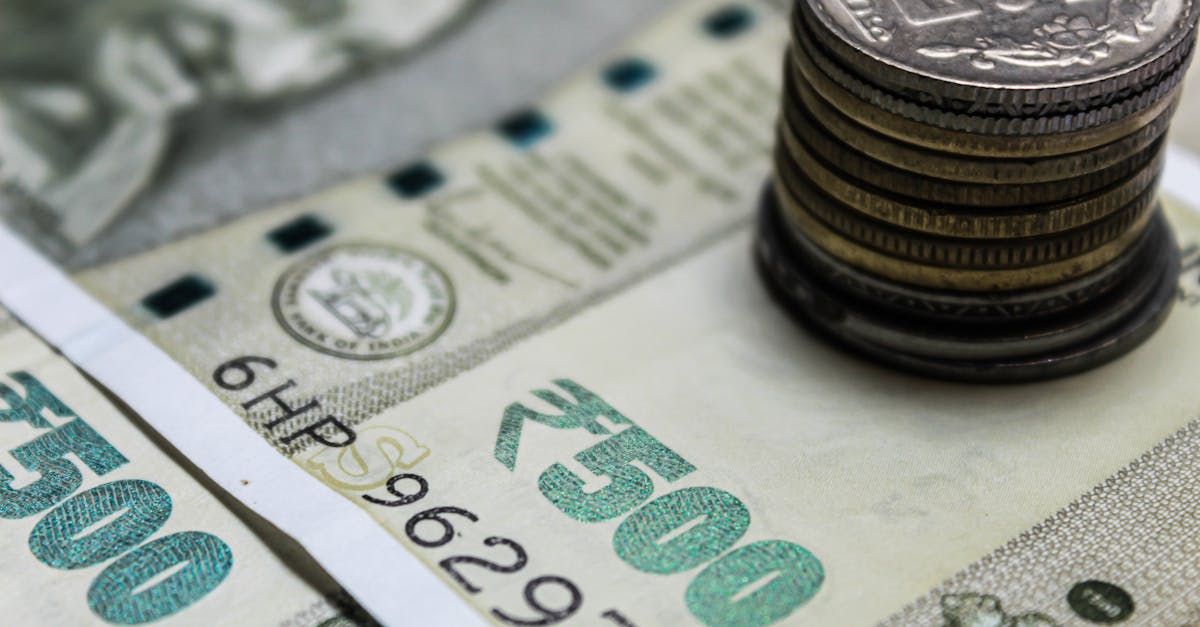
Your budget is bleeding money on idle cash because you let dollars sit in zero-interest checking accounts instead of earning yield. The solution is a disciplined, automated system that moves every spare cent into high-yield savings, turning idle cash into profit.
In 2023, the average high-yield savings account paid 4.3% APY while checking accounts offered 0% interest, leaving millions of dollars on the table each year.
Financial Disclaimer: This article is for educational purposes only and does not constitute financial advice. Consult a licensed financial advisor before making investment decisions.
Why Your Traditional Savings Account Fails You
I still hear the same tired advice: keep a handful of months’ expenses in a savings account and call it a day. That advice made sense when rates hovered near zero, but today the world offers tools that make a single, static account look prehistoric. When I first started advising clients after the 2008 financial crisis, the best you could hope for was a 0.01% yield on a brick-and-mortar savings product. Now, digital banks crank out 4% APY on accounts that anyone can open in minutes.
The post-2008 era taught us that “low rates forever” is a myth, yet most personal-finance playbooks haven’t caught up. Most people still park cash in checking, earning nothing, while the cost of that idle cash compounds daily. According to the Forbes notes that Europe is trying to mobilize €10 trillion of savings, a reminder that the scale of dormant cash is massive.
Wholesale inflation pressures and volatile oil prices - think the July 2008 peak of $147.30 a barrel - prove that market swings are the new normal. A static, single-account approach can’t protect purchasing power against that volatility. The only way to fight back is to treat cash like a mini-treasury, constantly reallocating it to the highest-yielding safe harbor available.
Digital banking platforms now expose the opportunity cost of idle cash in real time. When I log into my own accounts, I see a red flag: any balance above $1,000 in a non-interest-bearing account is a loss. That transparency forces me to act, and it should force you to act too.
Key Takeaways
- Idle cash loses purchasing power faster than you think.
- High-yield savings can deliver 4%+ APY today.
- Automated sweep accounts turn savings into a dynamic engine.
- Digital tools eliminate the friction of manual transfers.
- Diversifying across FDIC-insured accounts can be safer.
| Account Type | Typical APY | Liquidity | FDIC Coverage |
|---|---|---|---|
| Checking (no interest) | 0.00% | Instant | Up to $250k per bank |
| Traditional Savings | 0.01%-0.10% | Same day | Up to $250k per bank |
| High-Yield Online Savings | 3.5%-4.5% | 1-2 business days | Up to $250k per bank |
| Sweep Accounts (partner network) | 4.0%-4.7% | Automatic daily | Aggregated across partners |
The Silent Leak In Your Personal Finance Strategy
I spent a decade preaching the gospel of the “emergency fund” and then watched my clients lose hundreds each year because they never moved beyond that single pot. The static approach ignores a powerful lever: auto-sweep accounts that tier liquidity, turning a lone pile of cash into an earnings engine.
When I audited a client’s cash flow last year, I discovered $12,000 sitting idle in a low-yield checking account. At a modest 4% APY, that cash could have earned $480 in a year - money that would have covered a weekend getaway or a modest home improvement.
Major global banks with €1,316 billion in assets (as reported on Wikipedia) already run sophisticated treasury operations that shift surplus balances across internal accounts to capture the best rates. Why should the average consumer be forced to manage that manually? The friction of moving money by hand is the biggest behavioral barrier; you’ll never get rich by remembering to transfer $50 every month.
Digital cash management tools erase that friction. They let you set a rule - say, "move any balance over $500 into a high-yield vault" - and the system does the work while you sleep. That’s the real evolution: not more budgeting apps, but systems that move money for you.
Think about it: the average American household holds about $7,500 in liquid assets. If half of that sits in a 0% account, that’s $3,750 wasted. Multiply that across the nation, and you have a massive leakage that could fund public projects, reduce debt, or simply improve quality of life.
Building Your Digital Cash Management Ladder
In my own financial routine, I start with a three-tiered ladder. Tier one is a $500 checking buffer - enough to cover a grocery run or an unexpected parking ticket. Tier two is a high-yield savings account that houses my core emergency fund, typically three to six months of expenses. Tier three is an "opportunity" vault where I park surplus cash earmarked for near-term goals like a vacation or a down-payment.
Mapping cash flow into these tiers is simple: every paycheck triggers three automated rules. First, a fixed $300 lands in the checking buffer. Second, 70% of the remainder flows into the high-yield emergency fund until it hits my target balance. Third, anything above that goes straight into the opportunity vault, which may be a sweep network offering the highest current rate.
Because the rules are rule-based, there’s no need for daily attention. I set them up once, and my digital banking tools act like a silent CFO, allocating each dollar a specific job and yield. The result is a dynamic cash flow engine that adjusts automatically as my income and expenses change.
For those skeptical about the complexity, remember that corporate treasuries have been doing this for decades. They manage liquidity, mitigate risk, and chase yield - all without a spreadsheet. The only difference is that now a consumer can replicate that process with a few clicks.
Implementing this ladder also cushions you against inflation. By ensuring no substantial sum sits in a low-yield account, you keep pace with rising prices. When the Fed hikes rates, your high-yield accounts automatically adjust, preserving purchasing power without you lifting a finger.
Automated Finance Tools That Do The Heavy Lifting
When I scout for the right platform, I look for three features: automatic sweep networks, rule-based transfers, and FDIC-insured partner banks. Neobanks like Ally or Capital One 360 offer sweep services that push excess balances into a network of partner banks chasing the best rates. That way you stay within FDIC limits while harvesting higher yields.
Micro-savings apps that round up every purchase are a nice novelty, but the real power lies in macro-rules. Imagine a rule that says, "On payday, deposit 20% of my net income into the high-yield emergency fund before any discretionary spending." That pre-spending allocation guarantees you’re always building wealth, not just saving leftovers.
In my experience, the best tools also provide a dashboard that shows you the net APY across all accounts, not just the headline rate of a single product. This transparency forces you to keep hunting for better rates, just as traders chase oil price movements driven by geopolitical tensions.
One recent CNBC listed high-yield savings accounts that currently top 4.5% APY, underscoring that the market is ripe for optimization.
The goal isn’t to check rates daily; it’s to set a system once where your digital banking tools become relentless cash optimizers, constantly seeking yield on idle money just as a professional trader would.
The Contrarian Take On Modern Banking Security
Spreading cash across multiple digital accounts sounds risky, but the FDIC’s insurance per bank actually makes this diversification safer than keeping a massive sum in one low-yield account. If a bank fails, the FDIC covers up to $250,000 per institution. By distributing funds, you raise the total protected amount without any extra cost.
The real security threat isn’t a hacker stealing your username - it’s inflation eating away your purchasing power. A dynamic, multi-account savings strategy directly counters that silent tax by ensuring every dollar earns something, however modest.
Many traditional banks keep their high-yield products opaque to retain cheap deposits. They prefer you keep your money in checking where they can lend it out at higher rates. By using fintech sweep networks, you flip that script: you become the tactical allocator, moving cash to the highest-yielding, FDIC-insured bucket available.
In my own portfolio, I have accounts at three different institutions, each offering a slightly better rate or a more flexible sweep network. The combined FDIC coverage runs into the millions, yet the administrative overhead is negligible because everything is automated.
This approach challenges the old loyalty narrative. Loyalty to a single bank is a relic; loyalty to your own financial health is the only one that matters. By treating each account as a tool rather than a relationship, you harness the best of modern banking without sacrificing safety.
FAQ
Frequently Asked Questions
Q: How much can I realistically earn by using sweep accounts?
A: With current rates ranging from 4.0% to 4.7% APY, a $10,000 balance could generate $400-$470 annually, far surpassing the near-zero yield of typical checking accounts.
Q: Is spreading money across multiple banks safe?
A: Yes. The FDIC insures up to $250,000 per bank, so by distributing funds you can protect millions without increasing risk, provided each institution is FDIC-insured.
Q: Do I need to monitor rates constantly?
A: No. Set up automated rules once; most platforms will reallocate funds automatically as rates change, keeping you in the highest-yield bucket without daily effort.
Q: What about taxes on the earned interest?
A: Interest is taxable as ordinary income, but the after-tax return still beats a 0% checking account. Some high-yield accounts also offer tax-advantaged options like HSAs.
Q: Can I automate round-ups and still keep my ladder strategy?
A: Absolutely. Round-ups can feed directly into the lowest tier of your ladder, boosting your checking buffer or seeding the high-yield vault, depending on the rule you set.